
Quick Answer
A carpark barrier controls vehicle entry and exit, but it won’t stop people walking through. Before buying, check how busy your entrance is, how drivers get in, what happens in a power cut, and what the quote covers.
Nothing ruins a weekday morning like a carpark barrier stuck halfway. Residents are honking, visitors are confused, and the guard is on the phone with the installer. Most of these problems don’t come from the barrier itself. They start with decisions made before installation began.
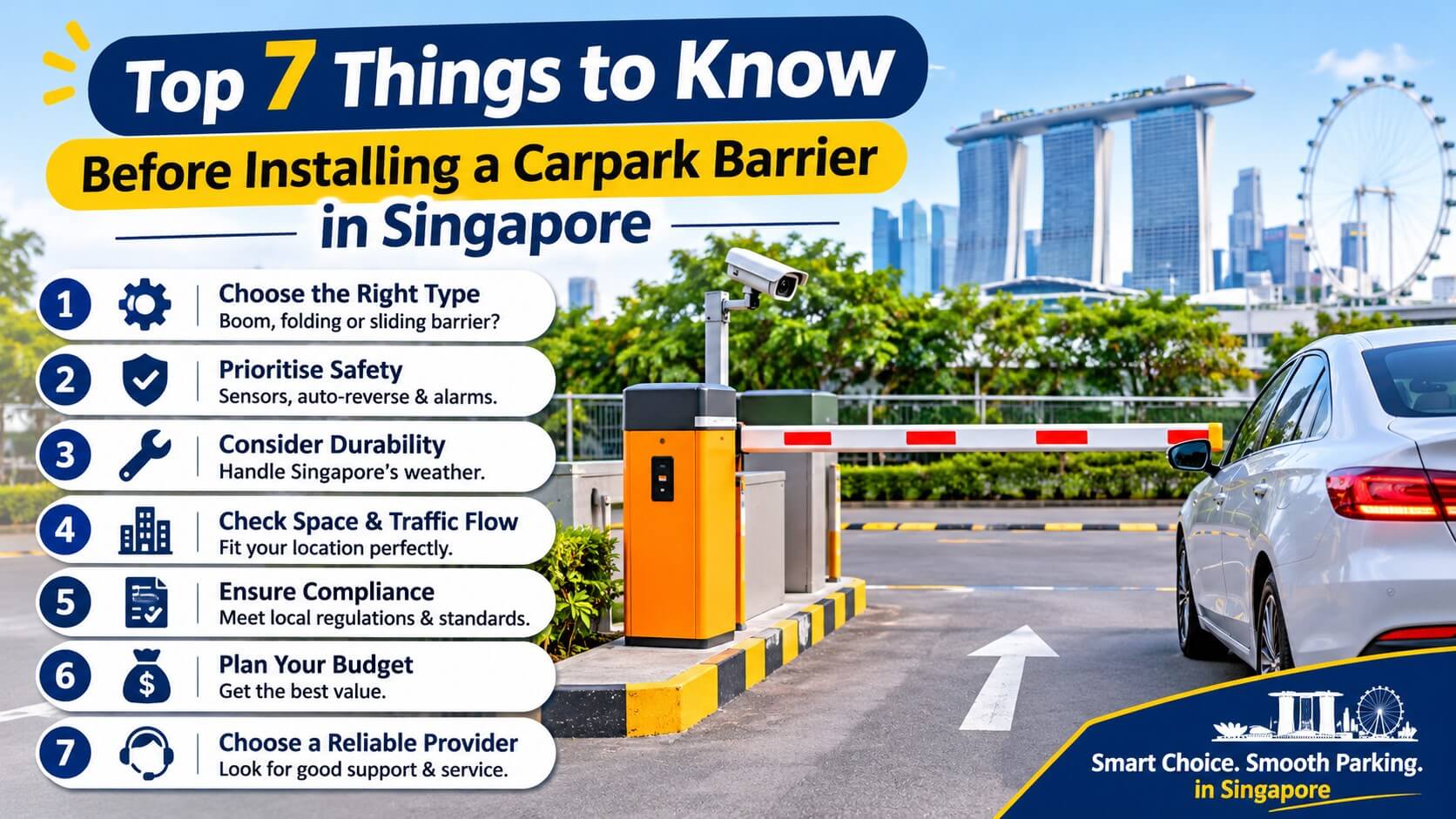
This guide covers seven things to think about before you buy, whether you manage a condo, run an office, or own a commercial building in Singapore. Read it before you talk to installers, and you’ll ask better questions and compare quotes more fairly.
1. A barrier controls vehicles, not people
A barrier only controls cars, motorcycles, and other vehicles. Anyone on foot can walk around the arm, so it won’t keep out determined visitors.
If you need to control people too, plan for a separate pedestrian gate or turnstile. Cameras and clear guard procedures help back it up.
2. Count how often it will lift each day
Every time the arm goes up and down counts as one use. Each barrier is built for a set number of uses a day, and busy entrances can go past that.
Take a 300-unit condo where each car goes in and out about four times a day. That’s 1,200 movements before you add visitors and deliveries. Split across two entrances, each one still handles hundreds of uses a day.
3. Don’t overlook the sensors in the road
Sensors buried under the road tell the barrier when a car is approaching and when it’s clear to lower the arm. When a barrier misbehaves, people often blame the motor first. In many cases, though, the sensors are the real problem. They might be set too sensitively, placed badly, or damaged during roadworks.
Ask your installer where the sensors will go and why. Then make sure they’re included in every maintenance visit.
4. Choose an entry method residents will actually use
The right method depends on who uses your entrance most. Here’s how the common options compare:
| Entry method | Best for | Watch out for |
| Access cards and key fobs | Small sites with fixed residents | Lost cards mean extra admin |
| Number plate recognition | Condos and offices with registered cars | Needs good lighting and a clear camera view |
| In-car tags | Residents who want hands-free entry | Each tag must be fitted and registered |
| QR codes and apps | Visitors, contractors, and deliveries | Visitors need a phone to use them |
Plan for a power cut
Ask this before you sign. Barriers behave differently when the power goes out:
Some lift automatically: Cars keep moving, but unregistered vehicles can get through too.
Some stay where they are: If the arm is down, nobody can drive in or out until someone lifts it by hand.
Some have a backup power pack: It lifts the arm and holds it up until the power returns.
In a condo where the carpark is the main way out, the arm-down option can trap residents in the basement. Make sure there’s a clear manual release, that guards know how to use it, and that emergency vehicles are never held up.
6. Plan the visitor route before installation
Many systems suit residents well but frustrate visitors. A resident glides through while a visitor struggles with an unclear intercom, and a queue builds behind them.
Set up visitor access early:
Digital visitor passes: Residents send passes to expected guests, who skip the intercom.
Video intercom: The guard can see the visitor and their car before opening the arm.
Separate delivery lane or timed pass: Where space allows, delivery vans stay out of resident traffic.
Cars slipping in right behind a resident’s car are another common problem. A quick-closing arm, cameras at the entrance, and clear signs all help.
7. Compare the full quote, not just the arm
- Two quotes for the same entrance can look alike and still cover very different work. Check that the price includes:
- Road works and sensor installation
- Electrical work by a licensed electrician
- Cameras and card readers for each entrance
- Network equipment and software
- Guard post screens, training, and warranty
Also ask how rainwater drains away from the barrier base. Standing water shortens its life.
Our DC-656 car park barrier
If you’re looking for a practical option for offices, apartment blocks or commercial buildings, the EZGates DC-656 is worth a look. It has a powder-coated finish and these key details:
Arm length: Up to 6 metres
Opening speed: 1.5 to 6 seconds
Weight: About 40 kg
Splash protection: Handles water splashing from any direction
Remote range: Works from 30 to 50 metres away
Frequently asked questions
Is a carpark barrier the same as an automatic gate?
No. An automatic gate closes the whole opening, including the walkway. A barrier only controls vehicles, so people can still walk through.
How often should a barrier be serviced?
For a busy condo, a check every three months is a sensible start, and it should include the road sensors. Agree on the schedule in writing before you sign.
What happens to the barrier during a power cut?
It depends on how it’s set up. The arm may lift, stay where it is, or be held up by a backup power pack. Every barrier should also have a manual release for guards.
Can I add number plate recognition later?
Often, yes, if the barrier and entrance layout allow it. A site visit will confirm.
Final Words
A good carpark barrier is one residents barely notice. Get these seven things right, and the arm fades into the background, which is exactly what you want.
Looking for a barrier for your condo, office, or driveway in Singapore? Browse the EZGates car park barrier range.